Choosing a white marble
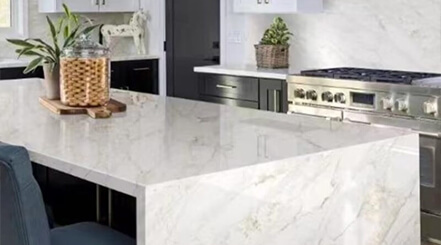
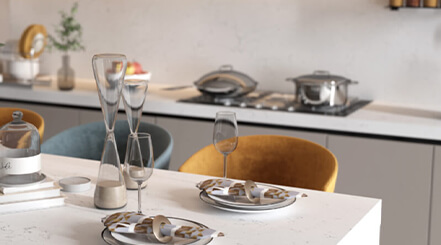
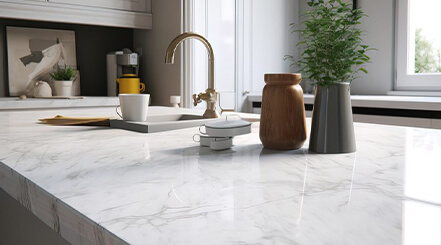
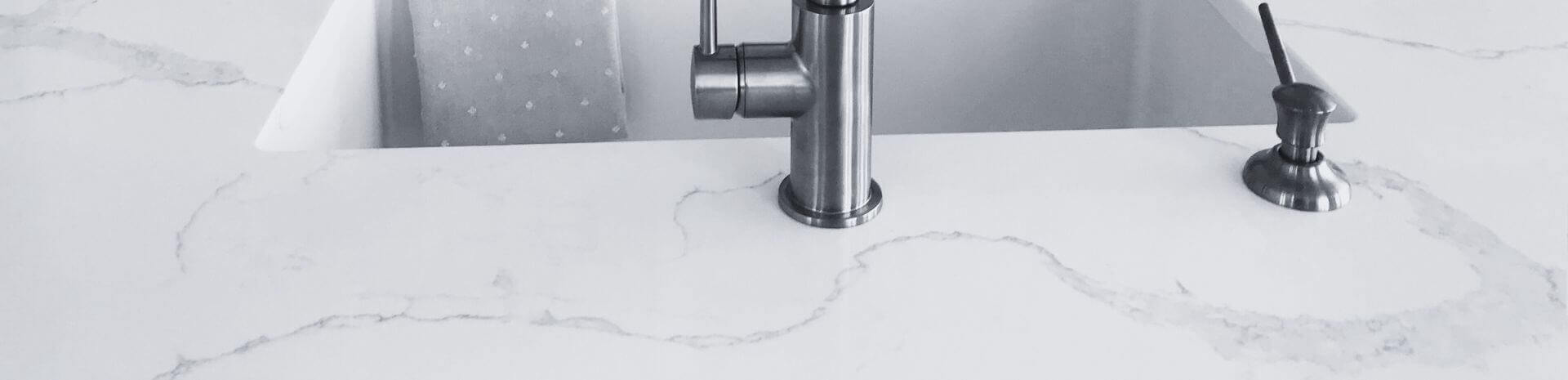
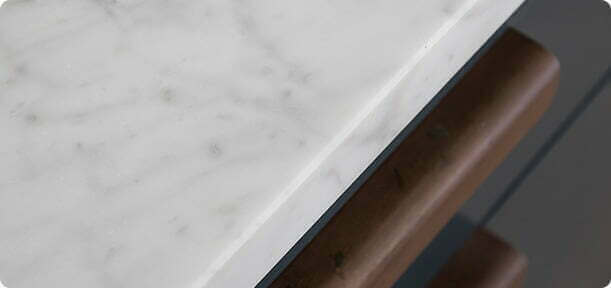
No two white marbles look the same. The main difference is the veining: how much there is, how bold it is and what colour it runs in.
Because marble is natural, every slab is different. If you love a particular look, ask us about the slab before it’s cut.
Caring for a white marble worktop
Sealing
Marble is porous, so it needs sealing when it’s fitted and resealing from time to time, typically every 6 to 12 months in a busy kitchen. A simple test: if water no longer beads on the surface, it’s time to reseal.
Etching
Acids such as lemon juice, vinegar, wine and some cleaning sprays can leave dull marks called etching. Sealing slows stains but doesn’t stop etching, so wipe up acidic spills quickly and use a pH-neutral cleaner.
Polished or honed?
A polished finish is glossy and shows off the veining. A honed (matt) finish is softer and hides light etching and scratches better, which suits a hard-working kitchen.
White marble worktop FAQs
Does white marble stain?
It can. Light-coloured marble shows stains from oil, coffee and red wine more than darker stones. Sealing it well and wiping up spills promptly keeps it looking its best.
Which is the whitest marble?
Plain whites such as White Sivec are among the brightest, with very little veining. Statuario is also very white, but with bolder grey veins.
Is Carrara or Calacatta more expensive?
Calacatta is usually more expensive. It’s quarried in smaller quantities and prized for its bold veining. Carrara is more widely available, which makes it the more affordable classic.