



Why choose concrete-effect quartz?
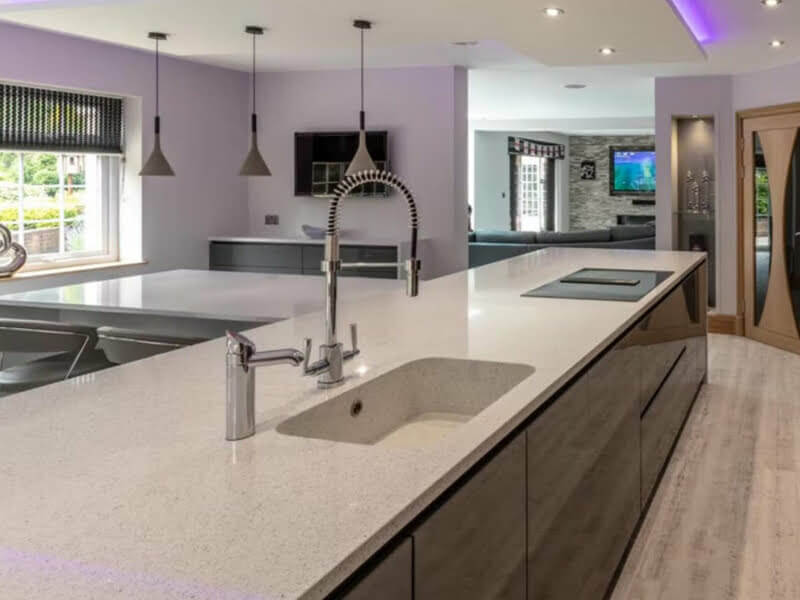
Concrete worktops look great in a modern kitchen, but real concrete is hard work to live with. Quartz gives you the look without the upkeep.
Concrete-effect quartz vs real concrete
| Concrete-effect quartz | Real concrete | |
|---|---|---|
| Sealing | Never needed | Needs sealing, then resealing regularly |
| Stains | Non-porous: wine, oil and lemon wipe off | Porous: oil, wine and acids can mark it |
| Cracking | Engineered for strength and consistency | Hairline cracks are common as it cures and settles |
| Heat | Use a trivet for hot pans | Copes with heat, but the sealant can mark |
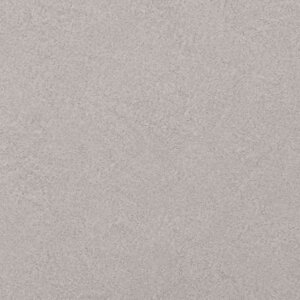
| Look | Consistent colour, easy to match across runs | Every pour is different |
Light, mid or charcoal?
Light concrete keeps smaller and north-facing kitchens bright and suits Scandi-style oak and white units. Mid-grey is the classic poured-concrete look and works with almost any colour of handleless kitchen. Charcoal shades suit industrial and loft-style kitchens, especially with brass, copper or black taps.
Polished or matt?
Most concrete-look quartz comes polished, which is the easiest finish to keep clean. For a more authentic, raw-concrete feel, look at matt options such as Cemento Matte or Silestone’s suede-finish colours. Matt finishes show water marks a little more, so wipe them dry.
What goes with concrete-effect worktops?
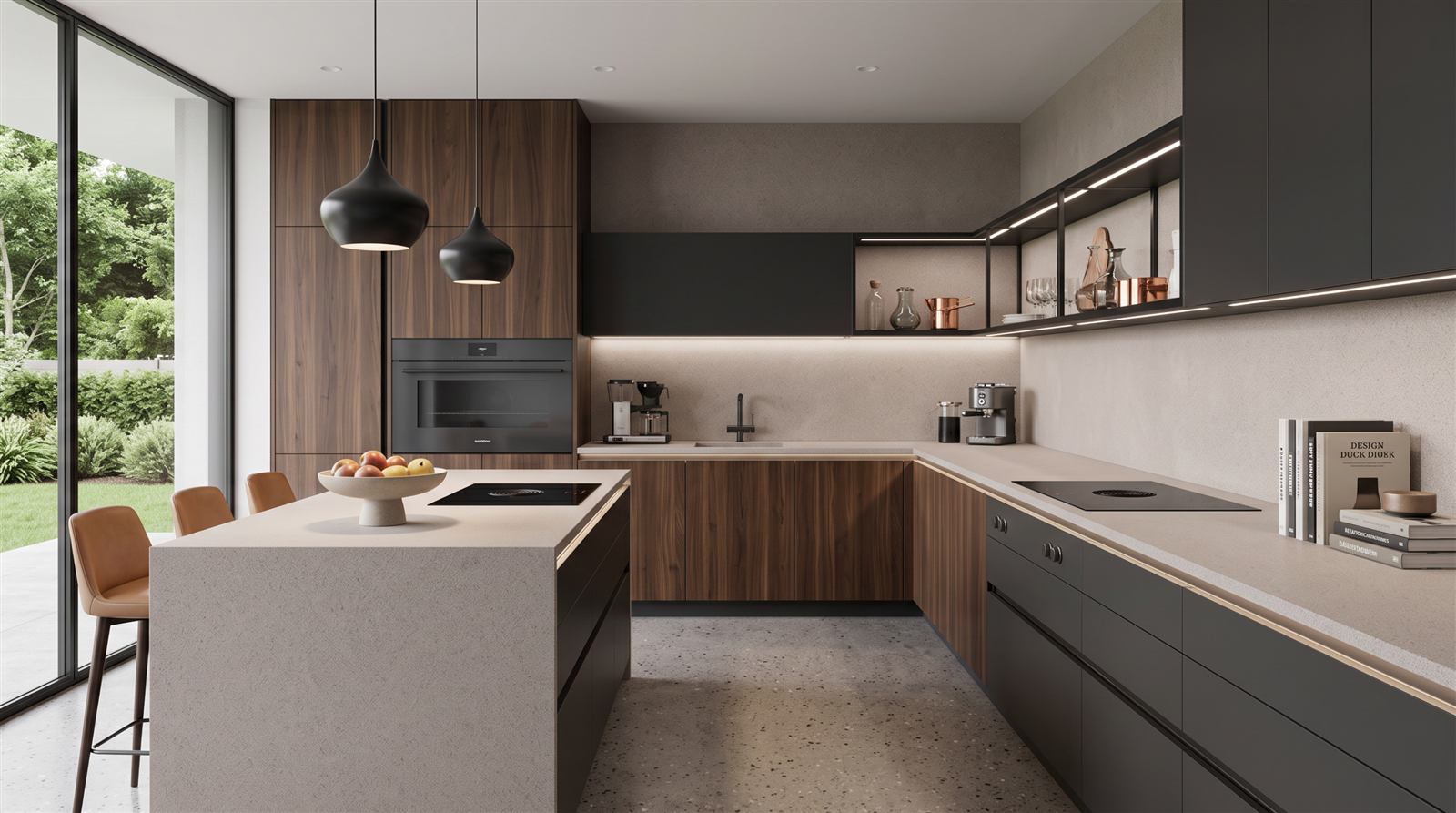
- Warm wood: oak or walnut units, shelves or flooring
- Deep colours: navy, forest or sage green, and black units
- Metals: brushed brass, copper or matt black taps and handles
- Simple splashbacks: white metro tiles, or the same quartz as an upstand